
Hamstring Strain Rehab in Eagan, MN
Rehab Exercises for Hamstring Strains and Hamstring Tears
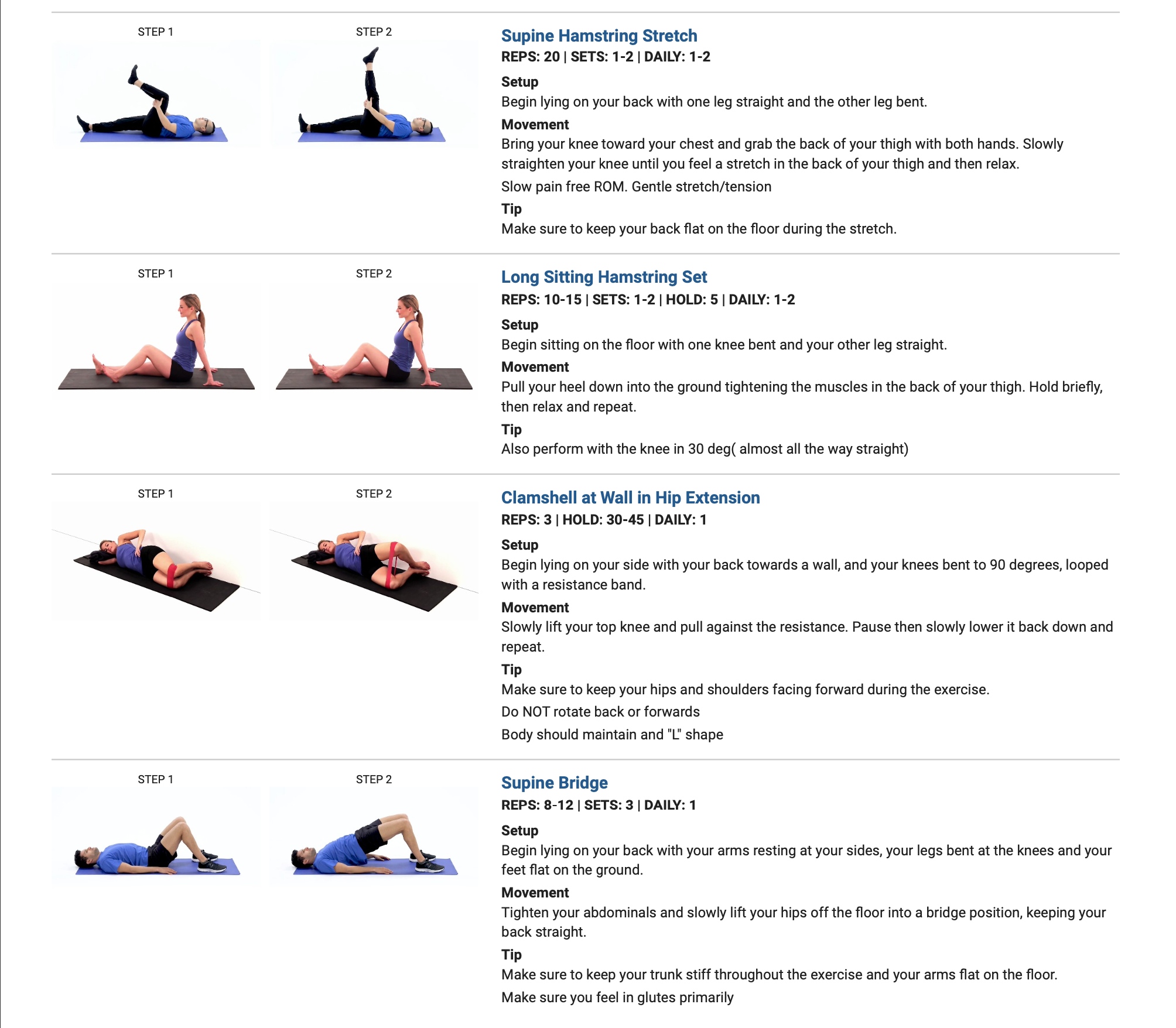
In the first 1–2 weeks, focus on gentle range-of-motion exercises, light isometric contractions, and pain-free bridging to maintain muscle activation without overloading the tissue.
The exact exercises and intensity depend on the severity of your strain, so it’s best to work with a sports physical therapist to guide safe progression and avoid setbacks.
Common Questions About Hamstring Strains, Pulls, Tears & Rehabilitation
-
Hamstring strain recovery time depends on the severity and location of the injury, previous hamstring injuries, and the demands of your sport. A mild hamstring strain may improve within a few weeks, while moderate or more significant injuries can require several weeks or longer before an athlete is ready for full-speed running and competition.
Pain-free walking or jogging does not necessarily mean the hamstring is fully healed. Athletes should gradually restore hamstring strength, running tolerance, sprinting speed, and sport-specific movements before returning to unrestricted activity.
-
Gentle mobility may be appropriate during hamstring injury recovery, but aggressive stretching is usually not the main focus early after a hamstring strain.
Hamstring rehab should prioritize progressive strengthening and gradually loading the muscle through longer muscle lengths. As pain improves, mobility and flexibility can be progressed based on symptoms and the athlete's specific needs.
For athletes returning to running and sprinting, restoring strength throughout the hamstring's available range of motion is especially important.
-
Return to running after a hamstring strain depends on symptoms, strength, and the athlete's ability to tolerate progressively faster movements.
Athletes typically progress from walking and lower-speed running to moderate-speed running, acceleration, and eventually high-speed sprinting. Going directly from jogging to maximum-speed sprinting can leave the hamstring unprepared for the forces required during sport.
Because hamstring demands increase substantially as running speed increases, progressive sprint exposure should be an important part of hamstring rehabilitation for soccer players, football players, runners, and other speed-based athletes.
-
The best hamstring rehab exercises depend on the stage and severity of the injury. Early rehabilitation may include hamstring isometrics, bridges, and controlled hip-extension exercises.
As symptoms improve, strengthening may progress to Romanian deadlifts, single-leg RDLs, hamstring sliders, hamstring curls, hip thrusts, and Nordic hamstring exercises.
For athletes, rehabilitation should eventually include more than strengthening. Running progressions, acceleration drills, plyometrics, high-speed sprinting, and sport-specific movements help prepare the hamstring for the demands of returning to competition.
-
Previous hamstring injury is one of the strongest risk factors for another hamstring strain. Recurrent hamstring injuries may occur when an athlete returns to sport with lingering strength deficits, insufficient exposure to high-speed running, inadequate rehabilitation, or poor tolerance to the sprinting demands of their sport.
A comprehensive hamstring rehabilitation program should address eccentric hamstring strength, hip and posterior-chain strength, sprinting capacity, training load, and sport-specific movement.
For soccer and other field athletes, rehabilitation should include progressive exposure to acceleration, high-speed running, change of direction, and repeated sprinting before unrestricted return to sport.