
ACL Injury Prevention for Female Soccer Players: 3 Key Exercises to Reduce Your Risk
How to prevent ACL injuries?
Female soccer players face a significantly higher risk of ACL injury compared to male athletes. If you've already suffered an ACL tear, learn more about our comprehensive ACL rehabilitation and return-to-sport programs.
Research consistently shows:
Female athletes are 2–8x more likely to tear their ACL
Female soccer players experience ACL tears at rates roughly 2.5–3x higher than males
Many ACL injuries are non-contact
Most occur during:
Landing
Deceleration
Cutting
Reactive defending
The good news?
At First Touch Performance Rehab, we focus on preparing athletes for the exact movement demands where injuries commonly occur.
If you’re serious about reducing ACL risk, these 3 exercises are foundational.
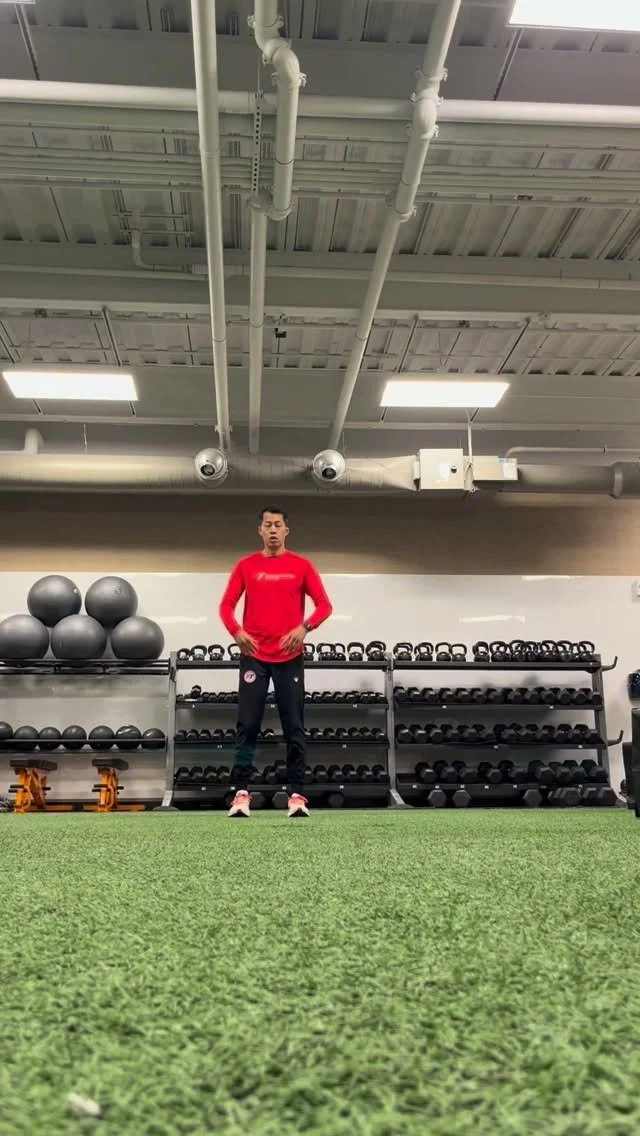
1. Drop Down Training (Landing Mechanics)
Why it matters:
Headers, rebounds, aerial challenges, and jumping all require athletes to safely absorb force.
Poor landing mechanics can increase knee valgus, excessive ground reaction forces, and unstable movement patterns.
Focus Points:
Quiet landing
Even left/right force absorption
Knees over toes
Avoid knee valgus collapse
Strong trunk control
Why it helps:
Drop down training teaches athletes how to control force before progressing into more chaotic sport environments.
Goal:
Own force absorption in controlled settings before game speed exposes deficits.
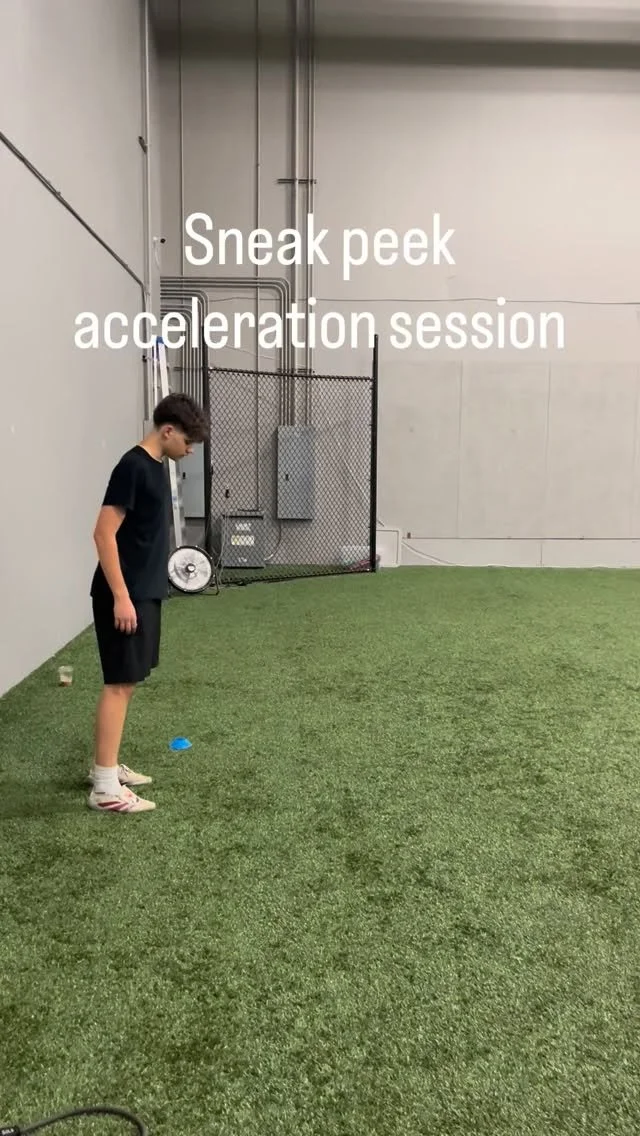
2. Linear Deceleration Training (Stopping Mechanics)
Why it matters:
Soccer requires repeated sprinting, stopping, and directional control.
Whether you’re:
Closing down opponents
Tracking back
Pressing defensively
Preparing to cut
…the ability to decelerate effectively is critical.
Focus Points:
Lower center of mass
Strong hip hinge
Proper penultimate step
Controlled final plant
Knee over toe alignment
Why it helps:
Athletes who cannot control forward momentum often place excessive load on the knee joint.
Better deceleration:
Reduces ACL stress
Improves athletic performance
Enhances control
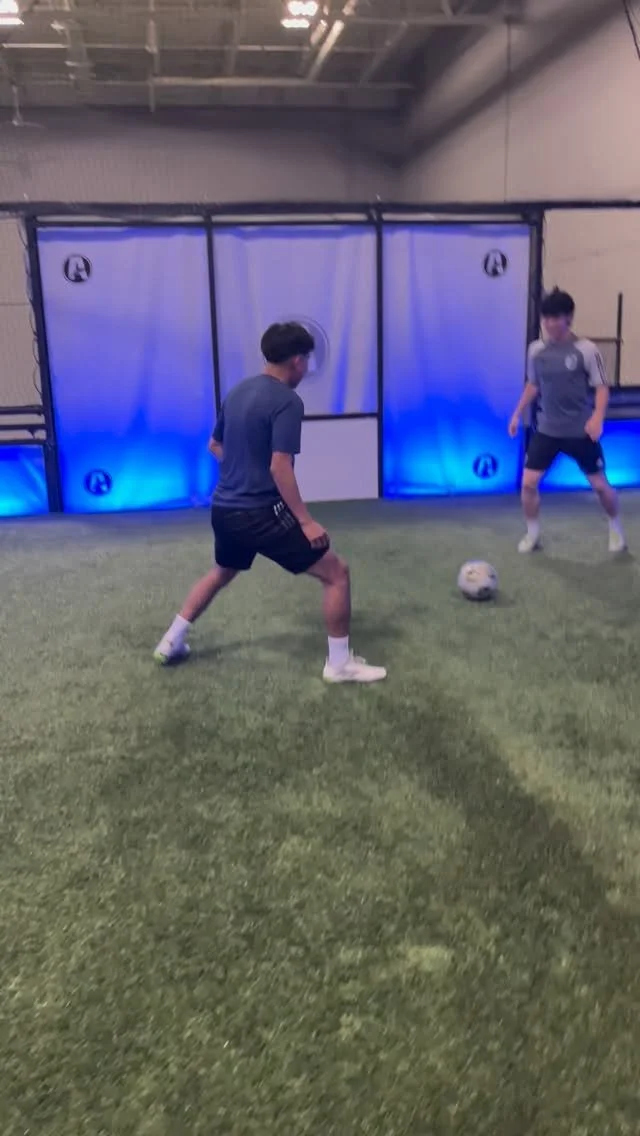
3. Reactive Deceleration (Defensive Chaos Training)
Why it matters:
This is where many ACL tears occur.
Most injuries don’t happen in predictable drills.
They happen during:
1v1 defending
Pressing
Responding to cuts
Chaotic sport situations
Focus Points:
Athletic ready stance
Proper shin angles
Quick controlled foot contacts
Avoid upright posture
Maintain dynamic trunk control
Why it helps:
Reactive drills train:
Brain + body together
This improves:
Decision-making
Movement efficiency
Defensive control
Injury resilience
Female Soccer Players: 3 Exercises to Reduce Your ACL Injury Risk
Why Female Soccer Players Are at Greater Risk of ACL Tears?
Several factors may contribute to the increased risk of ACL injuries in female soccer players. Research suggests that a combination of biomechanical differences, hormonal influences, strength deficits, neuromuscular control limitations, and movement mechanics may all play a role.
Biomechanical differences such as hip and knee alignment can influence how forces are distributed through the lower extremity during running, cutting, jumping, and landing. Female athletes often demonstrate greater knee valgus (inward knee collapse) during athletic movements, which may increase stress on the ACL.
Hormonal considerations have also been studied as a potential factor affecting ligament laxity and tissue properties throughout different phases of the menstrual cycle. While research continues to evolve in this area, it is considered one of several factors that may influence ACL injury risk.
Strength deficits, particularly in the glutes, hamstrings, and core musculature, can reduce an athlete's ability to control lower extremity positioning during high-speed movements. The hamstrings play a critical role in helping protect the ACL by assisting with dynamic knee stability during sprinting, deceleration, and change-of-direction activities.
Neuromuscular control deficits refer to the body's ability to coordinate movement efficiently and react to changing demands during sport. Poor neuromuscular control can lead to delayed muscle activation, decreased stability, and less efficient movement patterns during competition.
Poor landing and deceleration mechanics are among the most commonly identified risk factors for ACL injuries. Many ACL tears occur during non-contact situations when an athlete lands from a jump, plants to change direction, or rapidly decelerates. Excessive knee valgus, poor trunk control, and inadequate force absorption strategies can increase stress on the knee joint and ACL.
Because many ACL injuries occur without direct contact, injury prevention should be a key component of every female soccer player's training program. A comprehensive ACL injury prevention program should include lower-body strength training, plyometric exercises, landing mechanics training, deceleration drills, balance training, and sport-specific movement development. Research has consistently shown that structured ACL prevention programs can significantly reduce the risk of ACL injuries in female athletes while also improving overall athletic performance.
For female soccer players, implementing an ACL injury prevention program year-round—not just during the competitive season—can help improve strength, movement quality, and resilience while reducing the likelihood of a devastating knee injury.
Click to schedule your ACL injury prevention session now!
What Are the Most Common ACL Injury Prevention Mistakes in Female Soccer Players?
1. Only Focusing on Strength Training
Strength training is an important part of ACL injury prevention, but strength alone does not reduce injury risk. Many athletes become stronger without improving how they move during cutting, landing, decelerating, and changing direction.
An effective ACL prevention program should also include movement quality, balance, neuromuscular control, and sport-specific training. Female soccer players need to learn how to apply strength during the movements where ACL injuries commonly occur.
2. Ignoring Deceleration Training
Many athletes focus heavily on acceleration, speed, and explosiveness while neglecting deceleration. However, many non-contact ACL injuries occur when an athlete is slowing down, stopping, or preparing to change direction.
Proper deceleration training teaches athletes how to absorb force and maintain good body position when reducing speed. Learning how to stop efficiently is just as important as learning how to sprint faster.
3. Skipping Reactive and Decision-Making Drills
Many ACL prevention programs are performed in controlled environments where athletes know exactly what movement is coming next. While these drills are valuable, soccer is unpredictable and requires constant decision-making.
Adding reactive drills and game-like situations helps athletes maintain proper movement mechanics under pressure. This creates a better transfer from training to real match situations where ACL injuries often occur.
4. Poor Single-Leg Strength and Control
Soccer is largely a single-leg sport. Sprinting, cutting, jumping, landing, and kicking all require athletes to generate and absorb force through one leg at a time.
Athletes who lack single-leg strength and control may struggle to maintain proper hip, knee, and ankle alignment during high-speed movements. Improving single-leg strength can help build more efficient and resilient movement patterns.
5. Only Performing ACL Prevention Exercises During the Season
Many athletes only perform ACL prevention exercises during preseason or when instructed by a coach. Unfortunately, movement quality and strength improvements are difficult to maintain without consistent training.
The most effective ACL prevention programs are performed year-round. Consistent exposure to strength training, plyometrics, and movement training can help reduce injury risk while improving overall athletic performance.
Our Approach to ACL Injury Prevention at First Touch Performance Rehab
At First Touch Performance Rehab, our ACL injury prevention programs are built around the same principles used to prepare and rehabilitate elite athletes. As a former MLS physical therapist, Dr. Calvin Mai combines sports physical therapy, performance training, and evidence-based injury prevention strategies to help athletes reduce their risk of ACL injuries and improve performance on the field.
Our ACL injury prevention model focuses on the key factors most commonly associated with non-contact ACL injuries, including:
Landing and jump mechanics
Lower-body strength development
Deceleration and force absorption
Cutting and change-of-direction control
Reactive movement and decision-making
Neuromuscular control and stability
Objective performance testing
Our goal is not simply to create stronger athletes. We aim to develop resilient athletes who can sprint, cut, jump, land, and compete with greater confidence while reducing their risk of injury. By combining strength training, movement quality, and sport-specific development, we help female soccer players build the physical foundation needed to stay healthy and perform at their highest level.
